
Pluto TV — Creating a personalized onboarding system
Turning first-time users into returning viewers

Context
A Platform in Transition
Pluto TV was evolving from a linear-first experience into a fully personalized streaming platform. The product had ambition — but the user journey hadn't caught up yet.
New users arrived with no signal, no context, and no compelling reason to return. The platform couldn't learn from them, and they couldn't discover what made it worth their time.
The Problem
A Classic Cold Start
Without early signal capture, the product had no foundation for personalization. Users faced a generic experience and had to work to find value on their own.
No Preference Data
No understanding of user tastes meant every session started from zero.
Late Personalization
The system only improved after sustained engagement — too slow to retain new users.
Generic Recommendations
Content surfacing felt random, not relevant — undermining trust in the product.
Weak Return Motivation
Without a reason to come back, first sessions often became last sessions.

The design question wasn't whether to ask users about their preferences. It was how to ask — in a way that felt lightweight, purposeful, and immediately rewarding.
Minimize perceived effort
Maximize perceived payoff
Make personalization feel instant
My Role
End-to-End Design Leadership
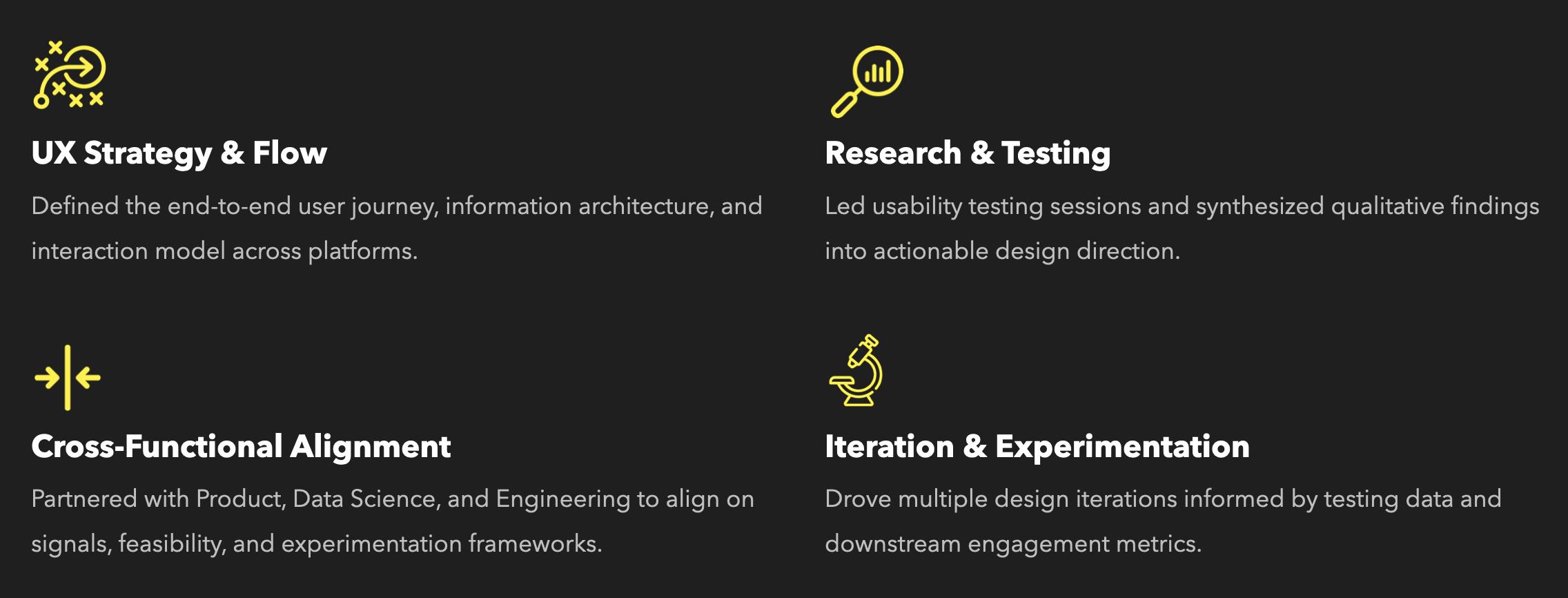
I led the complete design of Pluto TV's onboarding and preference capture experience across Connected TV and mobile platforms — from early strategy through final shipped product.
Approach
Signal Quality Over Friction Removal
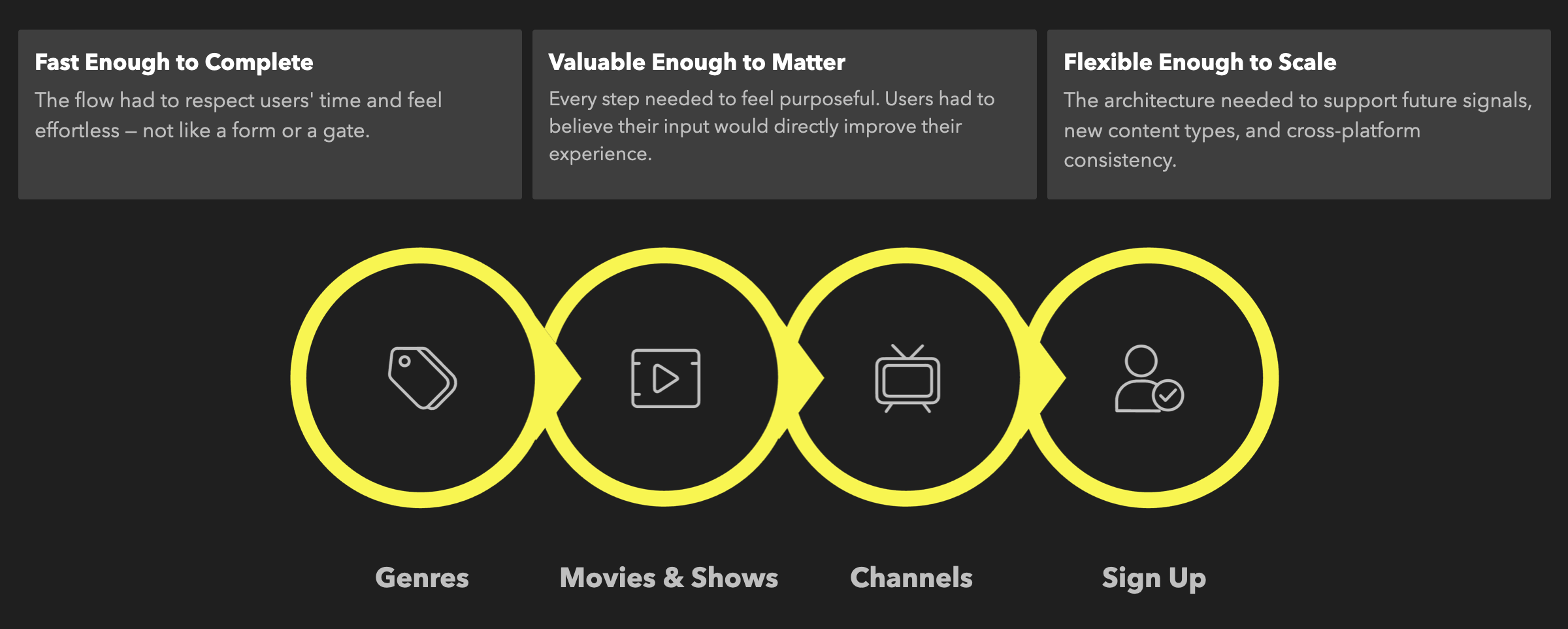
The design challenge wasn't simply to reduce steps — it was to build an experience that earned user investment. We set three governing design principles from the start.
Key Screens for User Testing
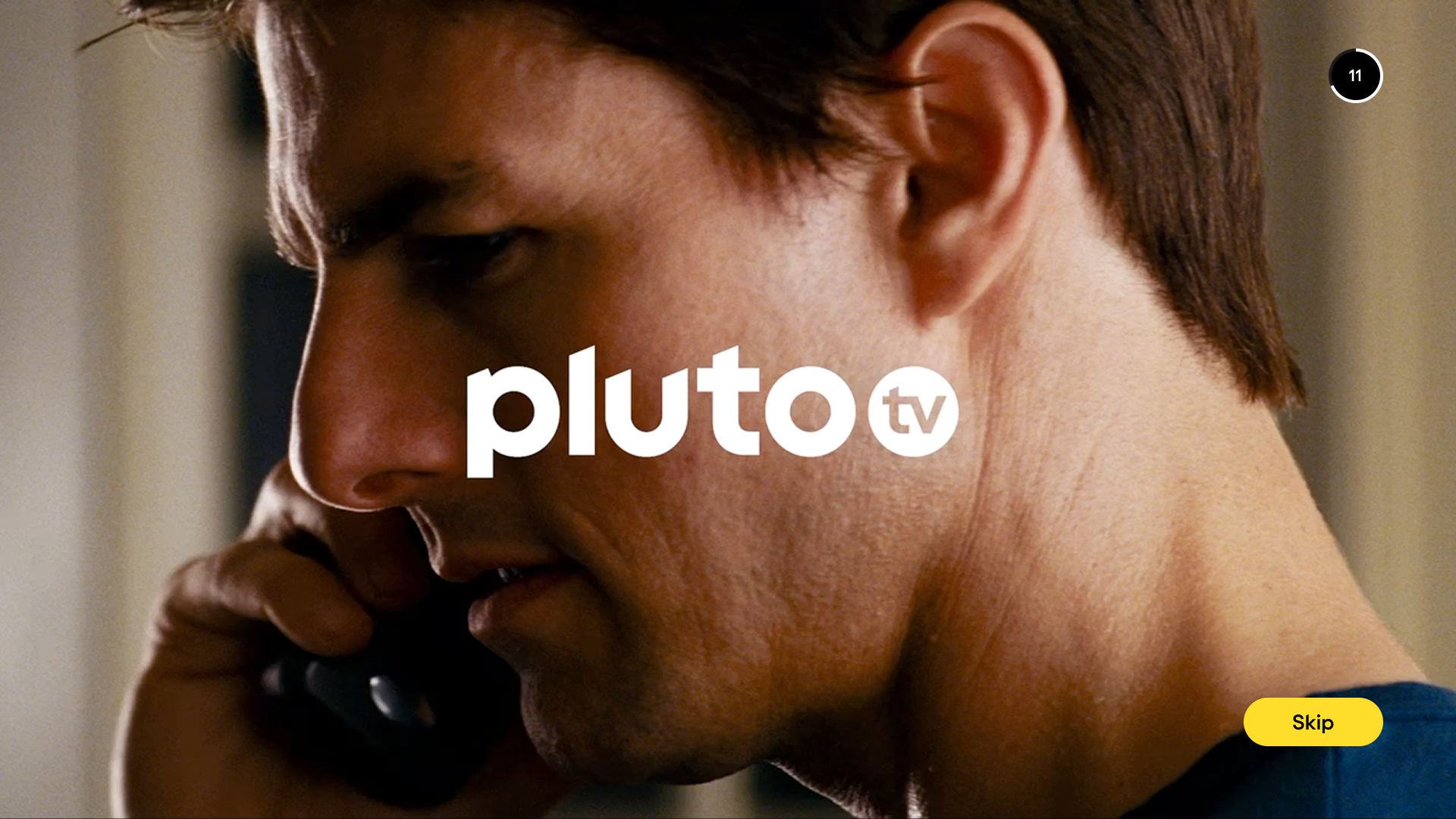
Welcome Video
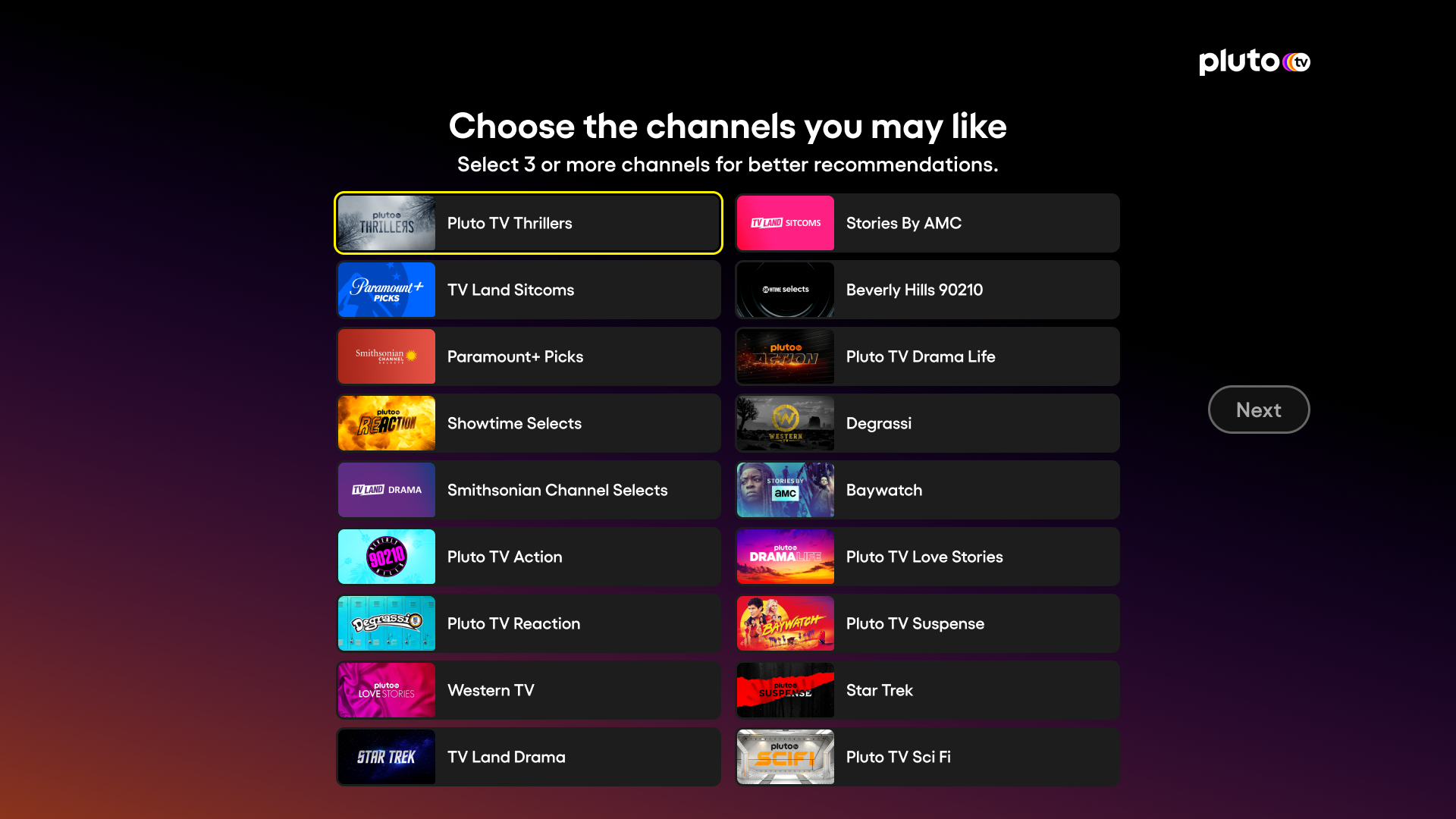
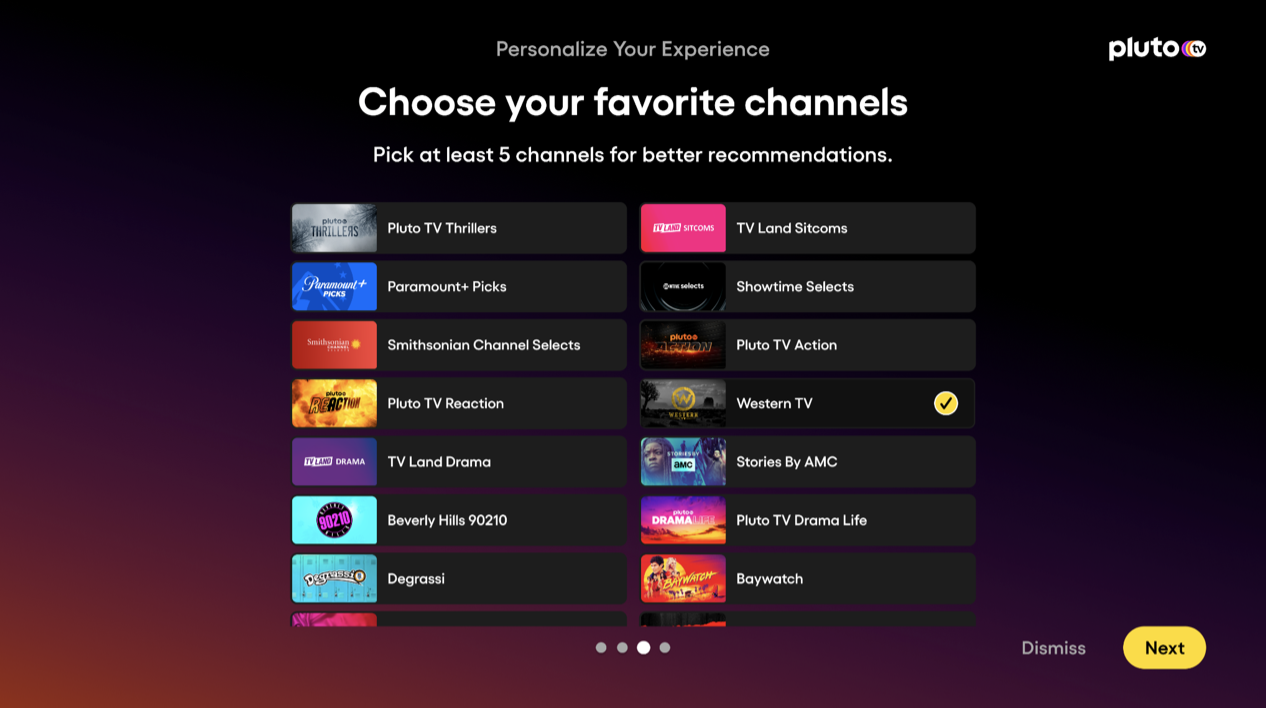
Channels
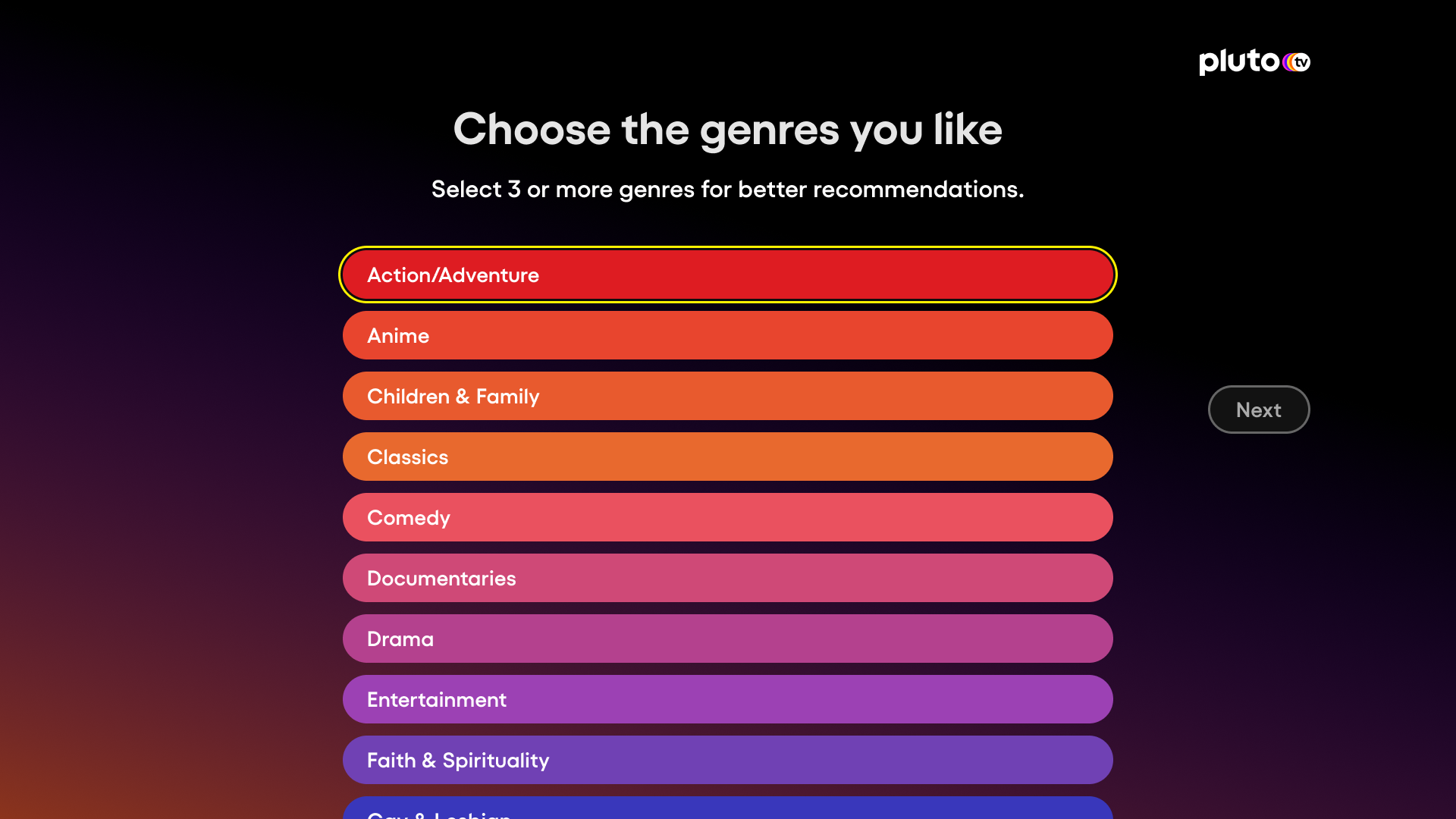
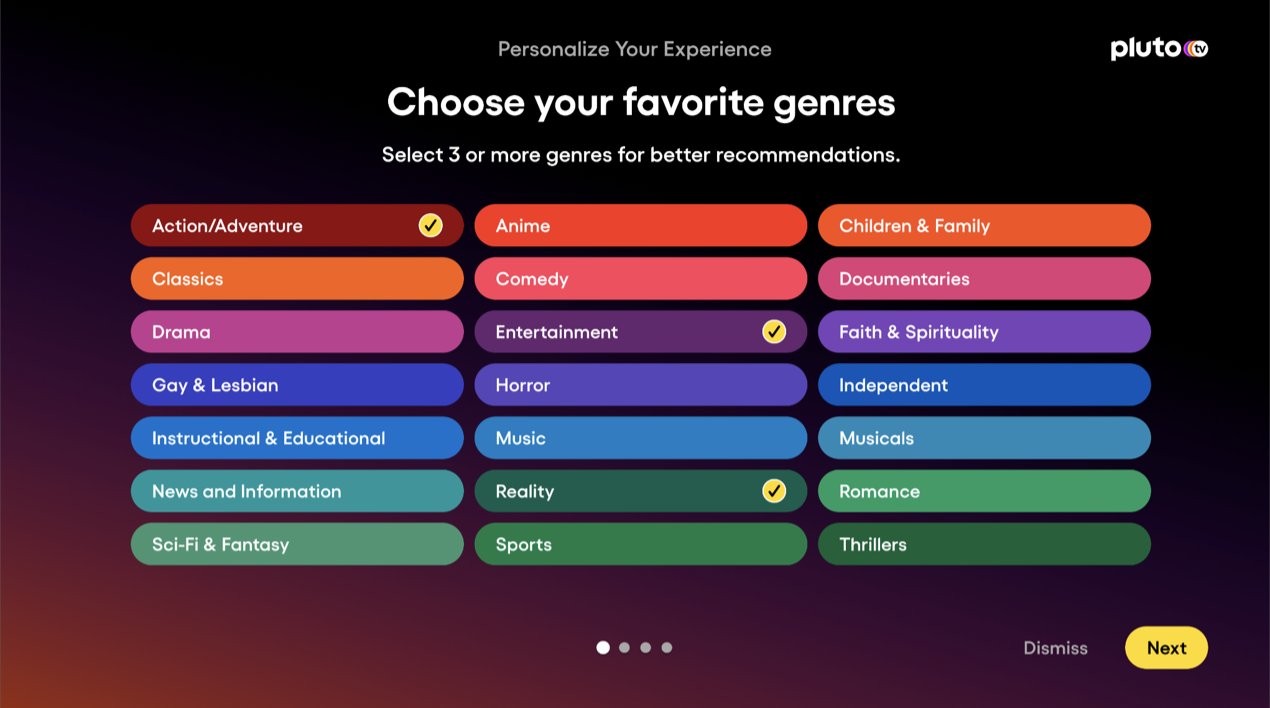
Genres
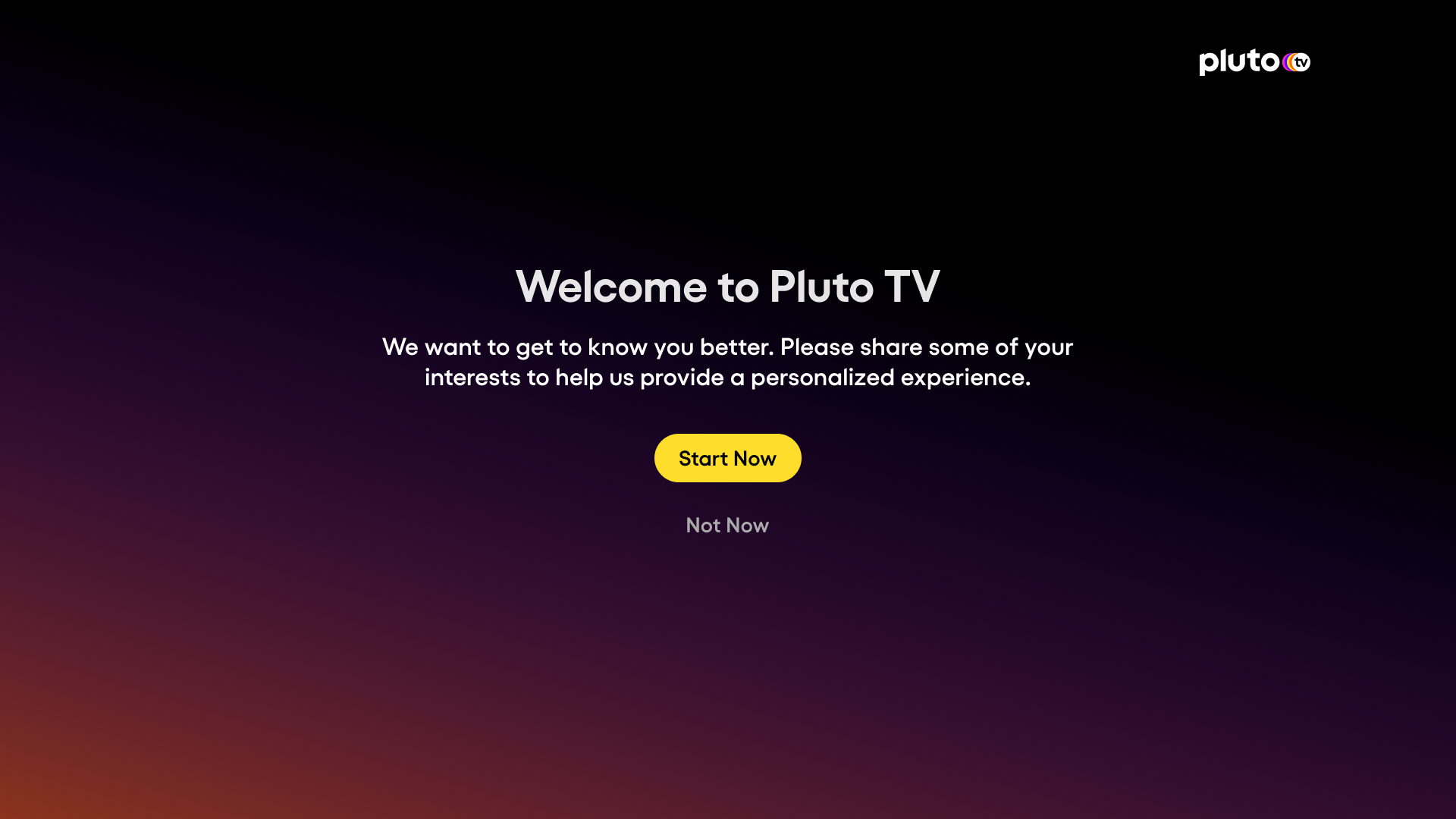
Intro
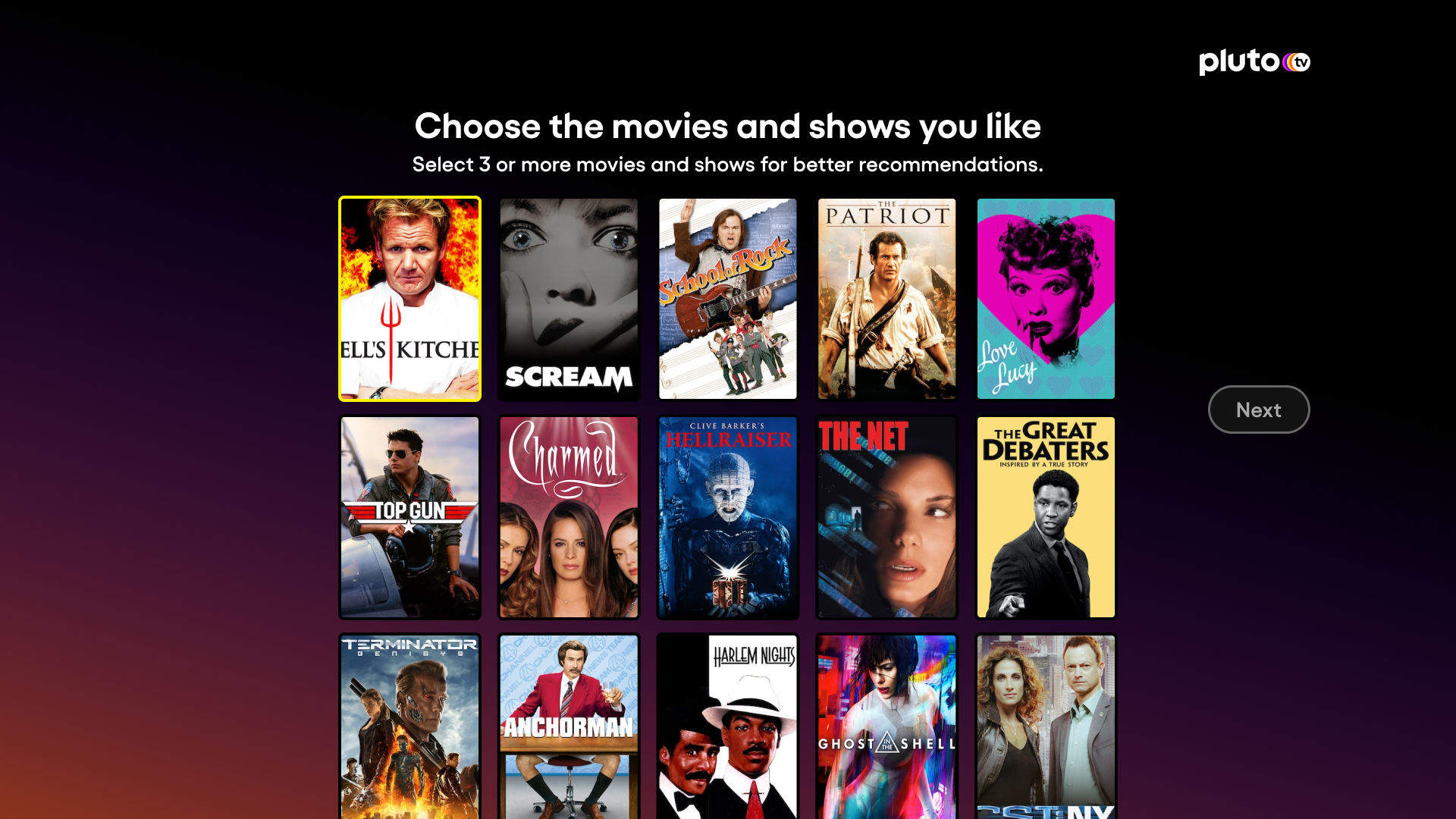
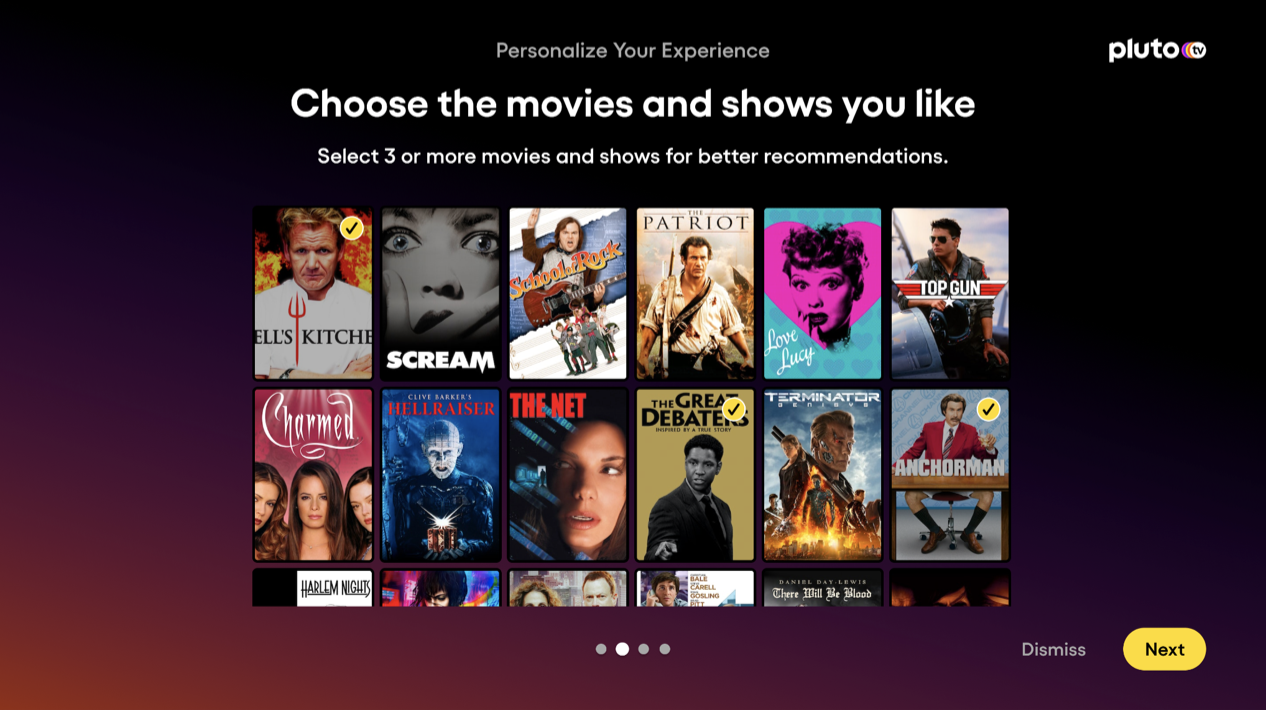
Movies and Shows
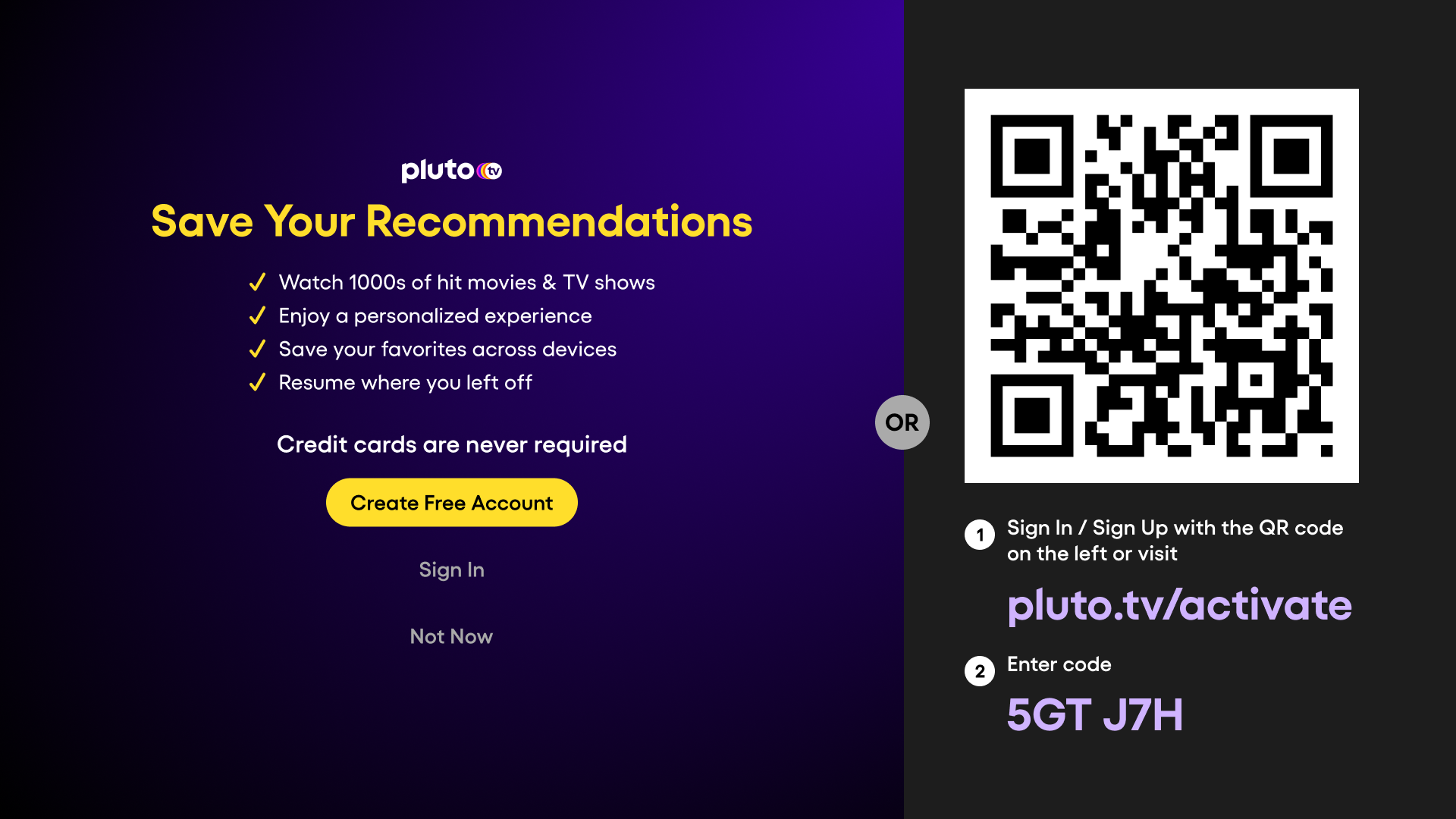
Sign Up
User Testing Framework
Validating the Core Bets
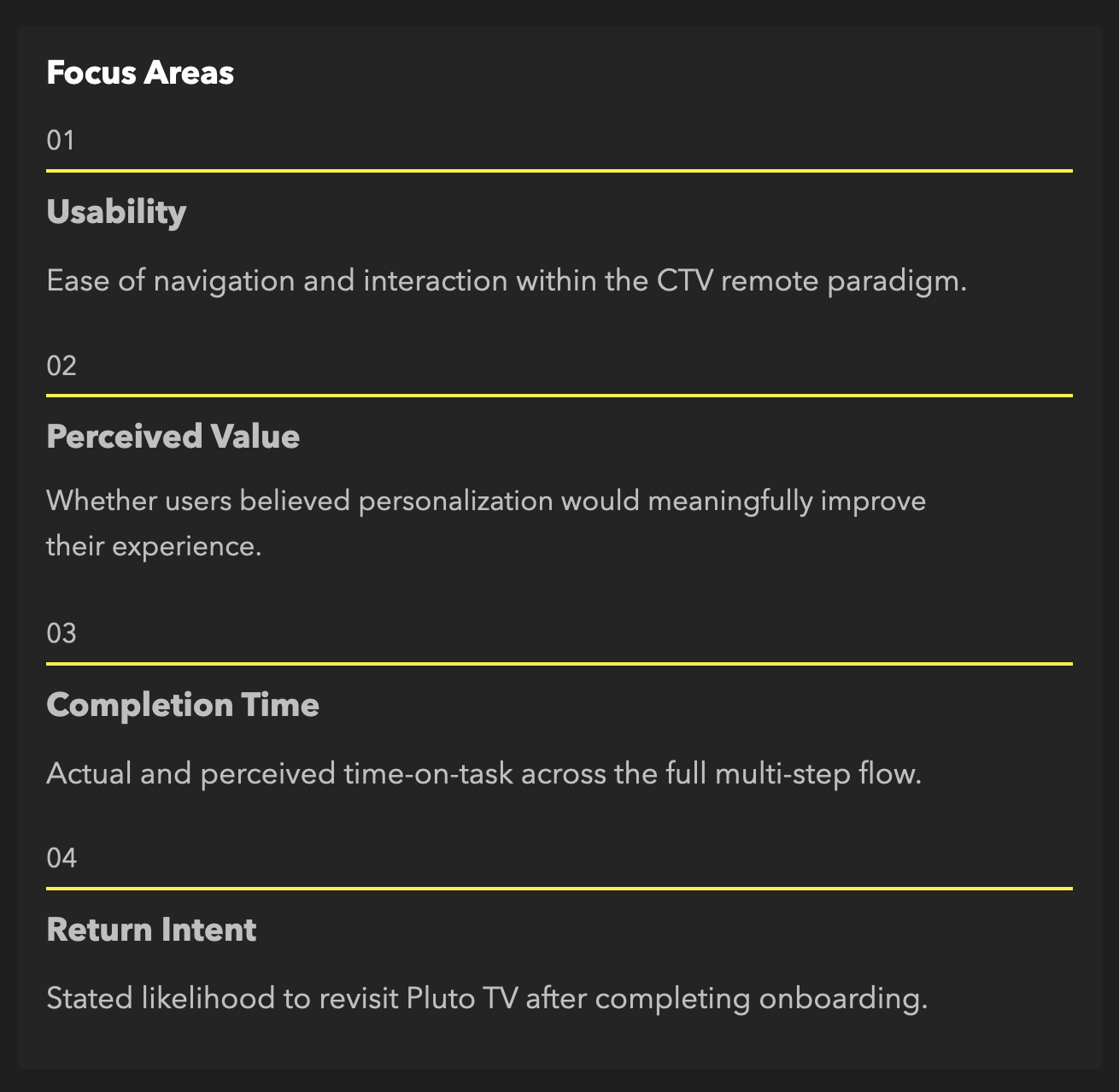
We ran structured usability testing to answer the questions that mattered most before committing to a final direction. Each session was designed to probe a specific hypothesis about user behavior.
Can users complete personalization without friction?
Do users understand why they're being asked these questions?
Does completing the flow motivate a return visit?
Key Insight #1
Value Was Immediately Apparent
The majority of users found the onboarding experience both valuable and easy to complete. Critically, the act of personalization itself became a motivator — users felt the product was listening and responding to them in real time.
Rather than perceiving the flow as a barrier to content, users interpreted it as a signal of product quality. Personalization wasn't just a feature — it was a first impression.

Key Insight #2
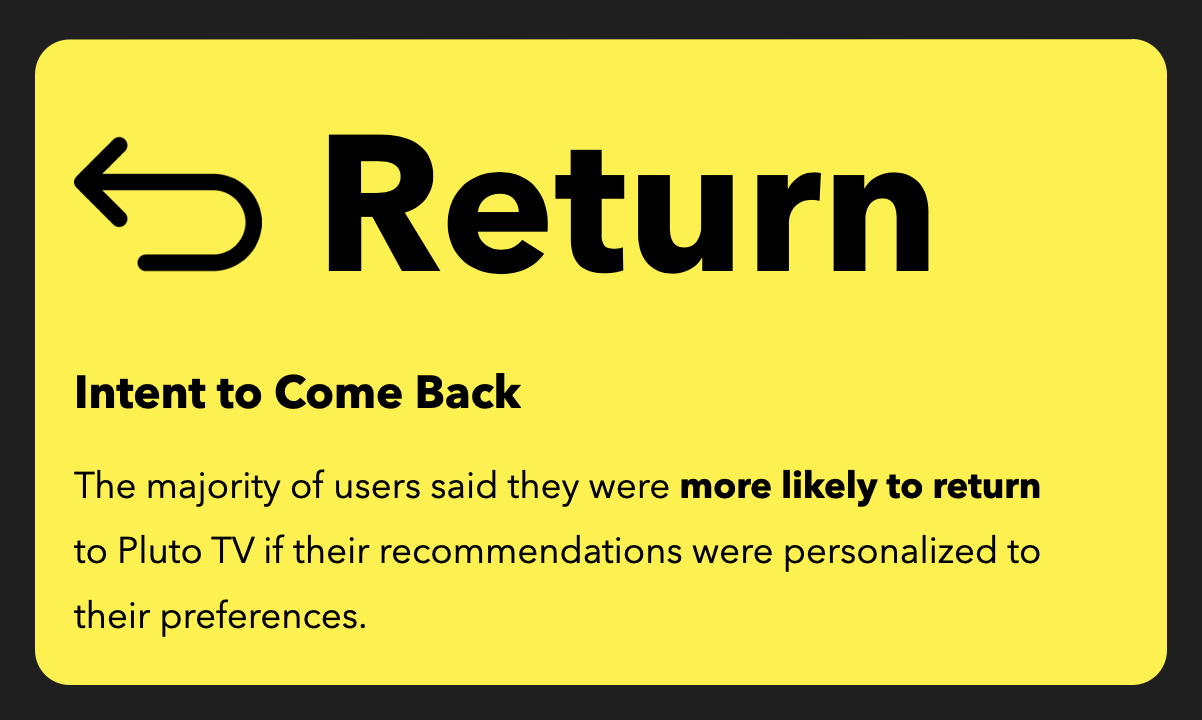
Personalization Drove Return Intent
This was the most strategically significant finding of the research. Personalization didn't just improve the in-session experience — it directly influenced whether users planned to come back at all.
The implication: onboarding is a retention mechanism, not just a setup step. Getting preferences right at the start has downstream consequences that extend far beyond the first session.
Key Insight #3
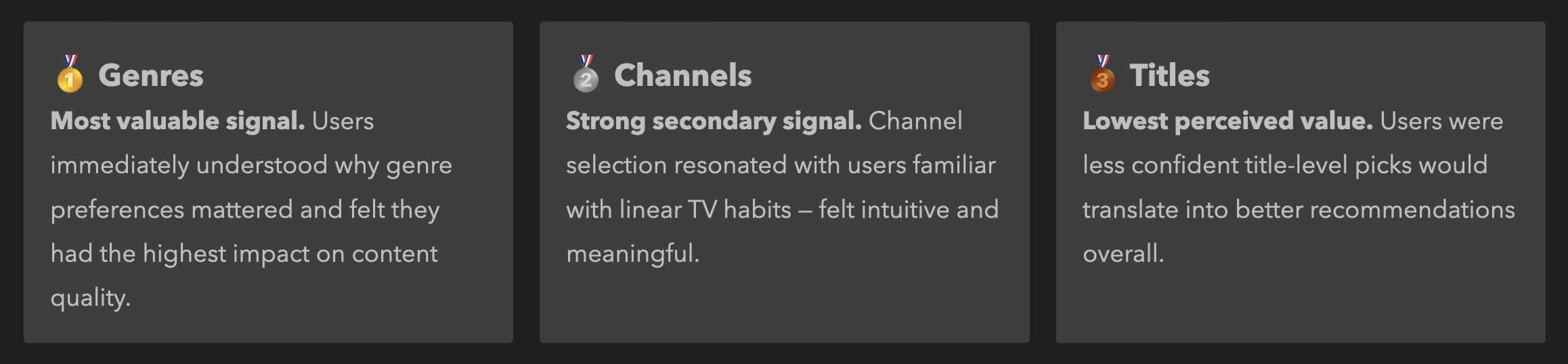
Not All Signals Are Created Equal
Users placed significantly different value on each type of preference input. Understanding this hierarchy allowed us to prioritize signal collection and reorder the flow accordingly.
This insight directly informed our decision to lead with Genres as the first and most prominent step in the revised flow.
Key Insight #4
Users Wanted More Control, Not Less
A common design instinct is to reduce choice to reduce friction. Our research challenged that assumption directly.
Users didn't want fewer options. They wanted better options — and greater confidence that their choices would matter.
Rather than simplifying the selection grid, users wanted richer, more comprehensive genre lists and the ability to make finer-grained distinctions. The desire for control was itself a signal of engagement and investment in the platform.

Key Insight #5
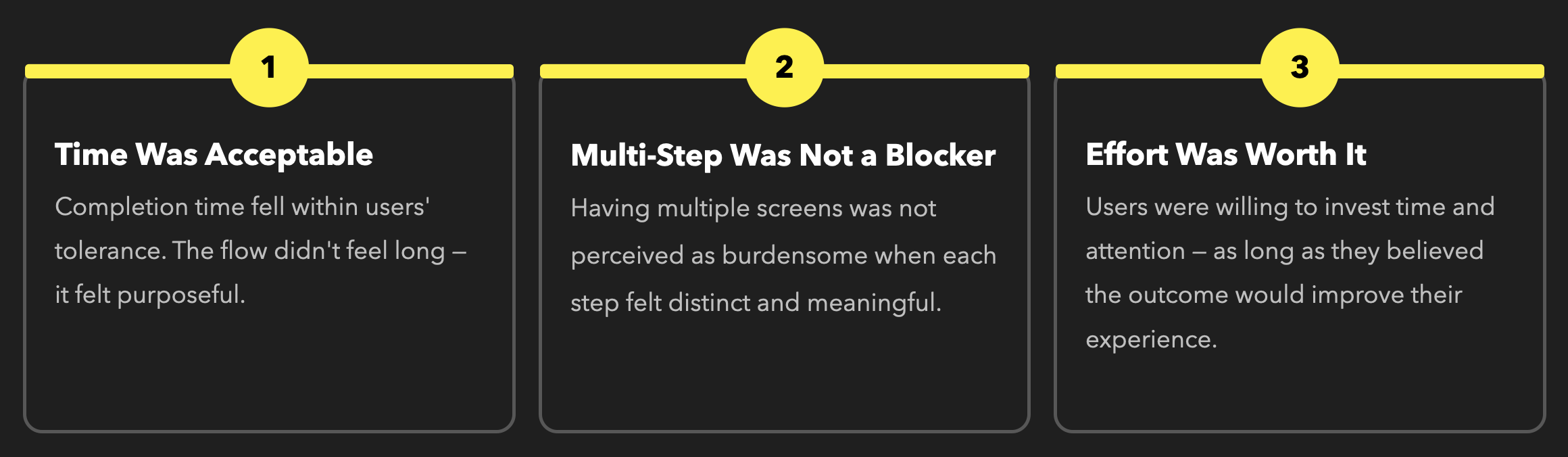
Friction Was Tolerable — When Value Was Visible
The key unlock: perceived value drives completion, not step count. Reducing friction without communicating value doesn't improve outcomes — it just produces faster drop-off.
What We Changed
Refinements Driven by Research
Genres Moved to Step One
The highest-value signal became the first interaction — setting the right tone and delivering immediate relevance.
Removed Intro Friction
Eliminated unnecessary intro screens that delayed users from getting to the actual preference-capture experience.
Increased Selection Density
Expanded genre and channel options to give users the sense of control and comprehensiveness they wanted.
Added Dismiss & Skip Options
Respected user autonomy — allowing users to opt out of individual steps without abandoning the full flow.
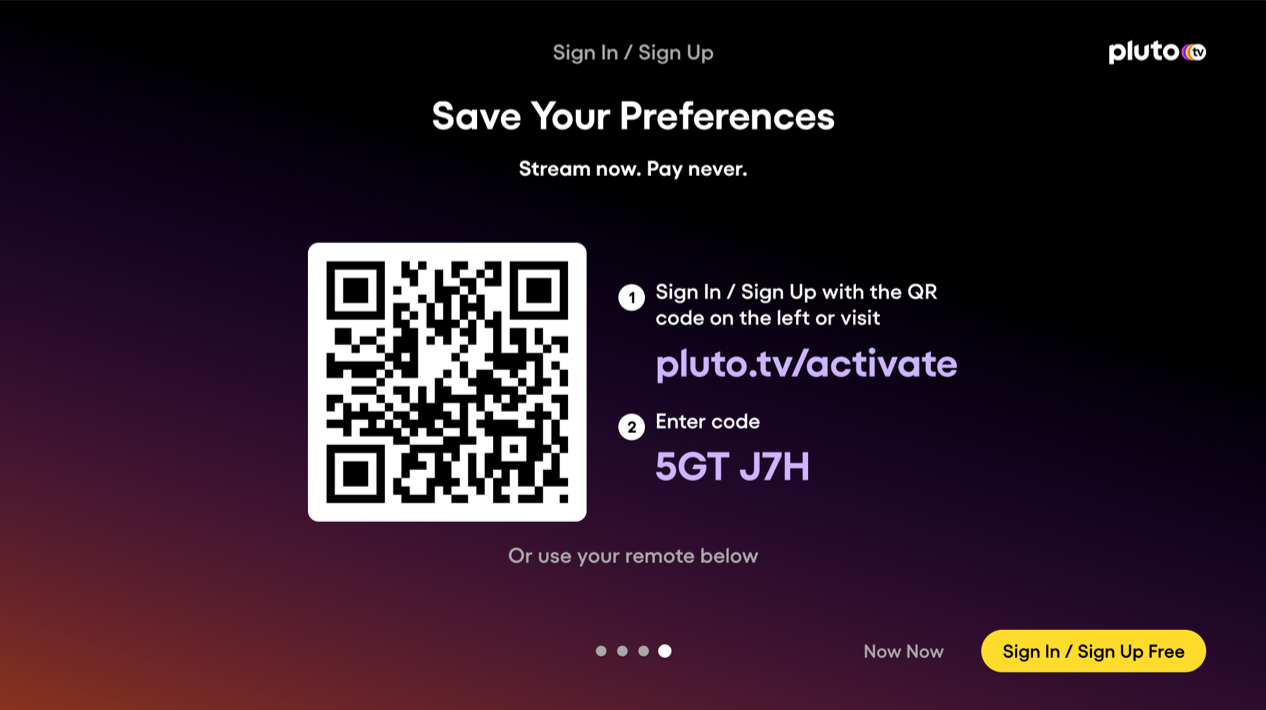
Moved Signup to the End
Deferred account creation until after users had experienced the value proposition — reducing early drop-off significantly
Final Experience
Faster. Clearer. More Intentional.
The revised onboarding flow delivered on all three founding design principles. It was fast enough that users completed it, valuable enough that they wanted to, and flexible enough to work across CTV and mobile.
Genres
Movies and Shows
Channels
Sign Up
System Thinking
Onboarding Was Just the Entry Point
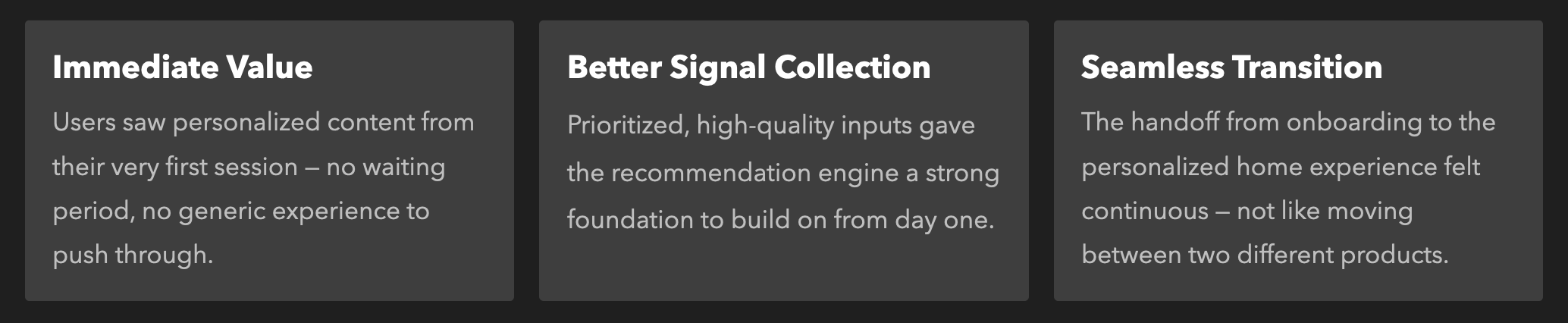
What we built wasn't an isolated feature. The preference capture layer became foundational infrastructure — the seed data that powered a much larger personalization system across Pluto TV's product ecosystem.
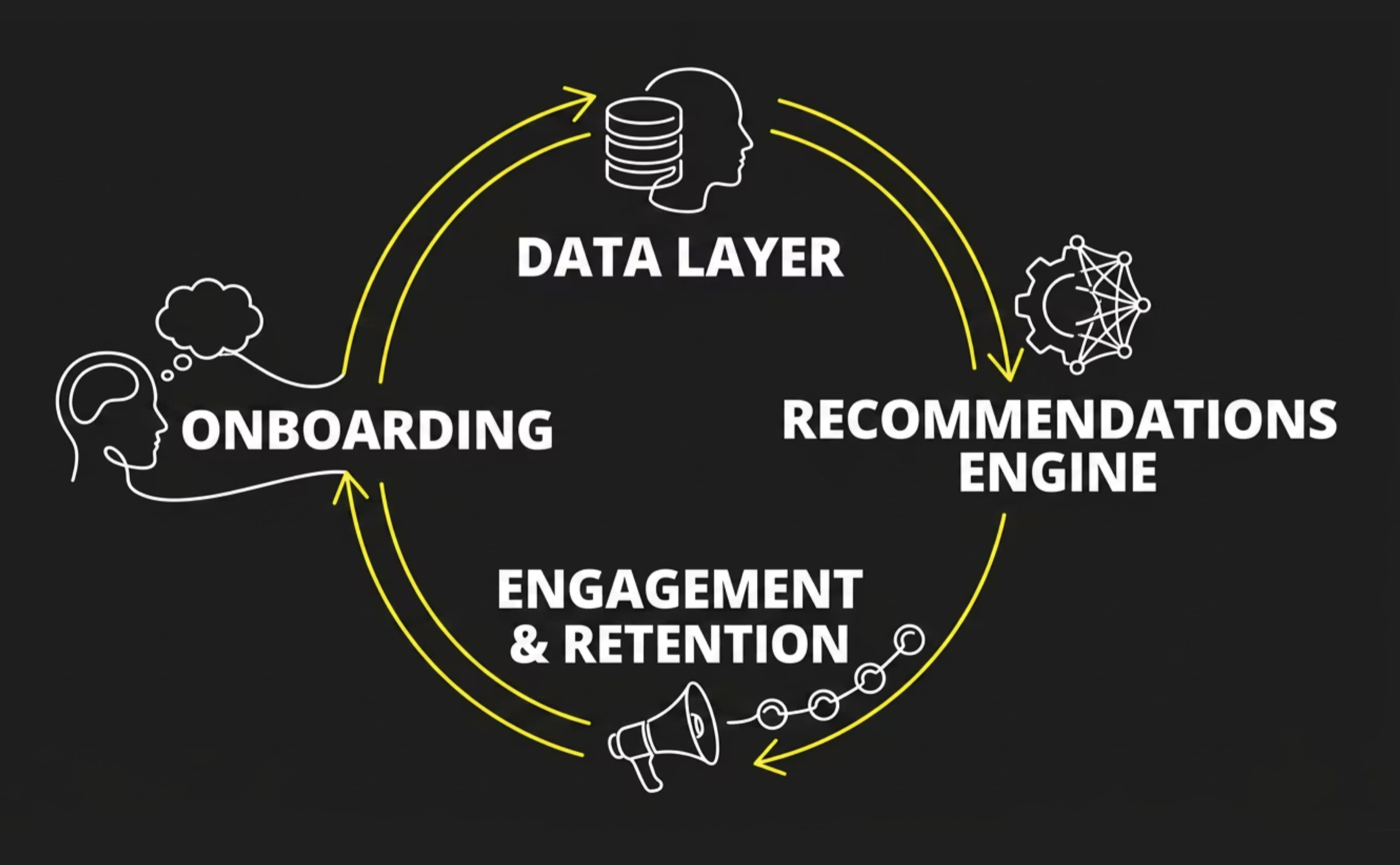
Every preference collected at onboarding became an input into recommendations, lifecycle messaging, cross-platform identity, and long-term retention loops.
Impact
The Work Moved the Needle
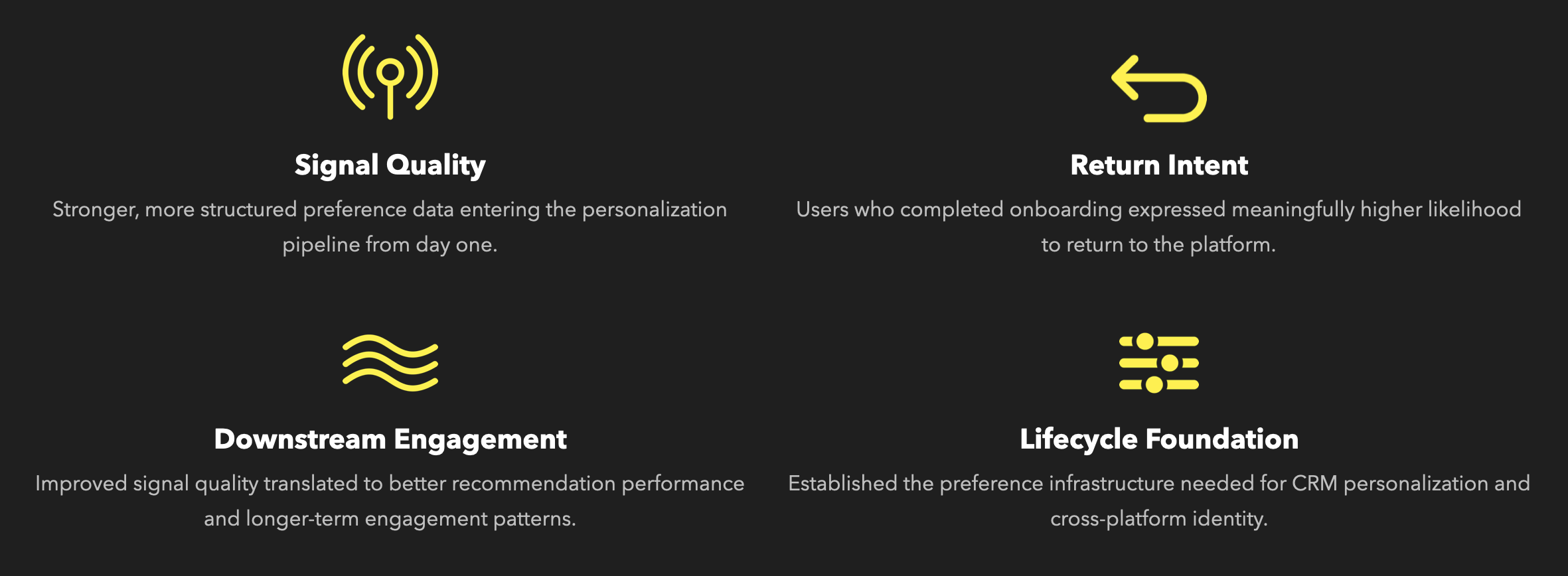
Onboarding moved from a setup step to a strategic retention mechanism — changing how the entire team thought about first-session design.

Takeaway
We didn't just onboard users.
We taught the product how to understand them.
The difference between an onboarding flow and a personalization foundation is intent. By designing for signal quality from the first interaction, we gave Pluto TV's recommendation engine something it never had before: a head start.